
Sep 13, 2026
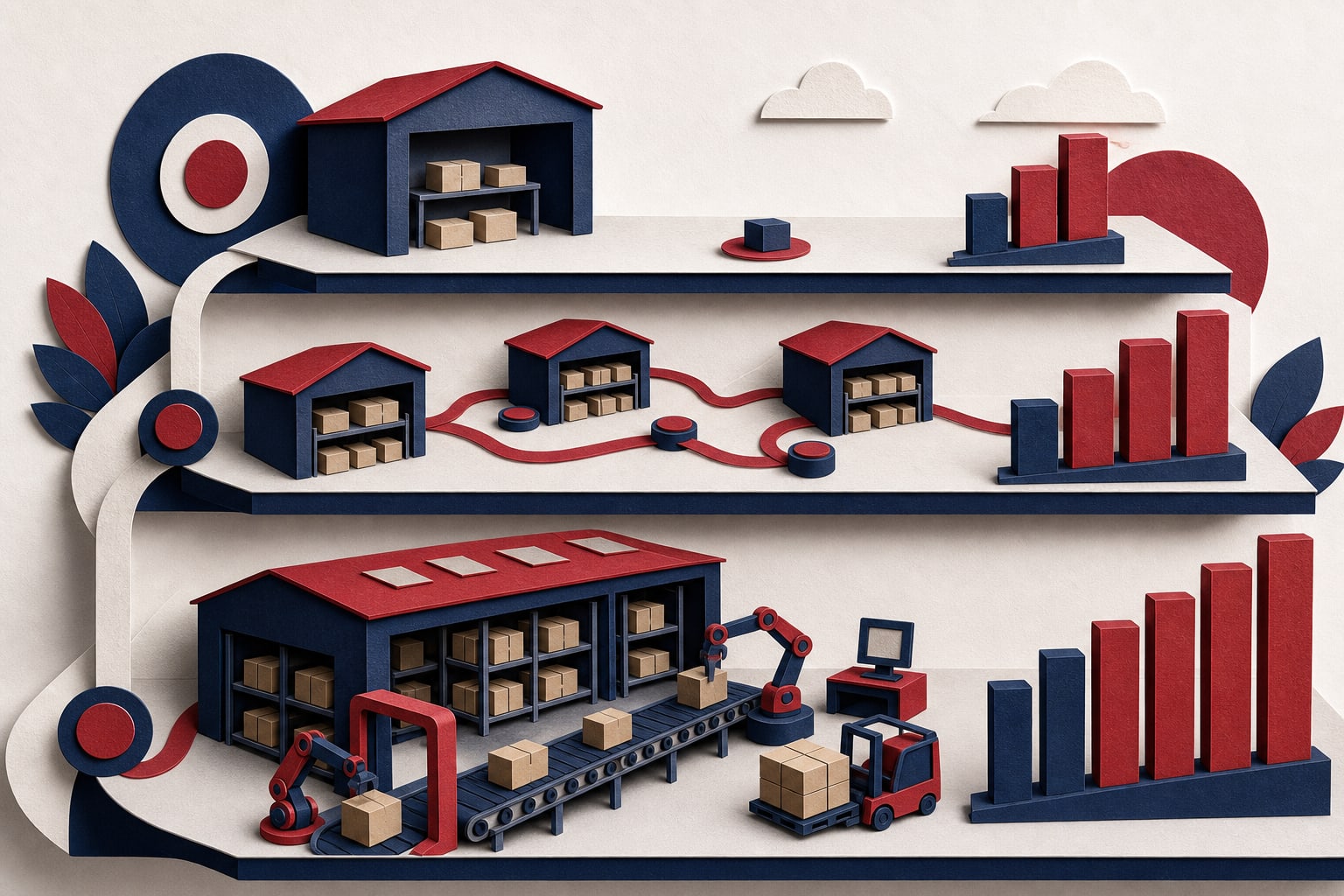
A custom inventory management system cost in 2026 typically ranges from $25,000 to $80,000 for a focused SME platform, $80,000 to $180,000 for a multi-location system with integrations, and $180,000+ for advanced warehouse, ERP, automation or AI-enabled requirements. The final price depends on workflows, integrations, data complexity and support needs.
That range is broad because inventory software is rarely one single feature. It may include purchasing, stock control, barcode scanning, warehouse transfers, batch tracking, supplier management, dashboards, e-commerce sync, accounting integration and user permissions. A small distributor may only need accurate stock counts and purchase orders. A manufacturer may need bills of materials, serial numbers, lot traceability and quality checks.
The main buying decision is not whether custom software is “cheap” or “expensive”. It is whether the system can reduce stockouts, overstocking, manual admin, fulfilment errors and disconnected spreadsheets enough to justify the build. In our delivery experience, the best projects start with a clear operational problem, not a wish list of screens.
This guide breaks down realistic 2026 pricing, cost drivers, build options, hidden expenses and budget planning for founders, operations leaders and CTOs evaluating a custom inventory management system.
$25k–$80k
Typical range for focused SME custom builds
$80k–$180k
Common range for integrated multi-location platforms
15%–25%
Annual support and improvement budget to plan
3–6 months
Typical first production release timeline
The fastest way to estimate inventory management system cost is to classify the build by operational size. A lean internal stock control tool is very different from a warehouse management system handling thousands of SKUs, multiple fulfilment channels and ERP synchronisation.
A basic project usually replaces spreadsheets or an ageing desktop tool. It focuses on product records, stock adjustments, purchase orders, simple reporting and user roles. These systems are valuable when errors are visible but workflows are still relatively straightforward.
Mid-range projects are where most growing SMEs sit. They need integrations with Shopify, WooCommerce, Amazon, QuickBooks, Xero, NetSuite or an existing ERP. They may also need barcode scanning, mobile warehouse screens, reorder rules, supplier performance tracking and management dashboards.
Enterprise-grade or operationally complex platforms cost more because they must handle edge cases reliably. Think lot tracking, serialised inventory, multi-warehouse transfers, returns processing, landed cost calculation, approval chains, audit logs and role-based access across departments or companies.
Common 2026 cost bands are:
These are planning ranges, not fixed quotes. A well-scoped $70,000 system can outperform a bloated $200,000 build if it solves the right operational bottlenecks first.
Use this table as a starting point for budget conversations. The same company can move between tiers depending on integration and workflow depth.
| Build type | Typical budget | Timeline | Best fit |
|---|---|---|---|
| Spreadsheet replacement | $25k–$50k | 8–12 weeks | Small teams |
| SME operations platform | $50k–$120k | 3–5 months | Growing distributors |
| Multi-warehouse system | $120k–$250k | 5–9 months | Regional operations |
| ERP-integrated platform | $180k–$400k+ | 6–12 months | Complex businesses |
| AI-assisted inventory tool | $90k–$250k+ | 4–9 months | Forecasting needs |
Budgets can fall outside these ranges when requirements are unusually simple or highly regulated.
The biggest cost driver is not the number of screens. It is the number of business rules the software must enforce. Inventory seems simple until exceptions appear: damaged goods, split shipments, substitute SKUs, expired batches, supplier minimums, backorders, partial receipts and manual overrides.
Integrations are the second major factor. A one-way nightly export is relatively cheap. Real-time two-way synchronisation between e-commerce, accounting, ERP and warehouse systems is much more expensive because it needs conflict handling, retries, logs, monitoring and data mapping.
Data migration also affects pricing. Importing clean product and stock data from one spreadsheet is straightforward. Consolidating years of inconsistent SKU records from multiple systems can become a project on its own. Poor data quality should be addressed early because it will undermine even a well-built platform.
User experience matters too. Warehouse staff need fast, low-friction workflows that work on scanners, tablets or rugged mobile devices. Managers need dashboards. Finance teams need auditability. Buyers need supplier views. Designing these roles properly takes discovery and testing, but it prevents costly adoption problems later.
Expect higher costs when you need:
Costs decrease when workflows are standardised, data is clean, integrations are limited and stakeholders agree on a phased release plan.
This table shows how common requirements affect build complexity. It can help separate must-haves from later-phase improvements.
| Requirement | Budget impact | Why it matters |
|---|---|---|
| Clean SKU import | Low | Simple migration path |
| Barcode scanning | Medium | Device workflow testing |
| ERP integration | High | Complex data mapping |
| Multi-warehouse transfers | High | Many edge cases |
| Batch traceability | High | Audit and compliance |
| AI forecasting | Medium–High | Needs quality data |
| Offline mobile mode | High | Sync conflict handling |
The highest-risk items should be validated during discovery, not left until the final testing phase.
Off-the-shelf inventory software usually wins on upfront price. Many cloud inventory tools charge per user, per order volume, per warehouse or per feature tier. For small teams with standard processes, this can be the right choice. Paying $200 to $2,000 per month is often better than building custom software too early.
Custom inventory software makes sense when the cost of adapting your business to generic software becomes higher than the cost of building around your real workflows. This often happens in distribution, manufacturing, wholesale, rental, repair, field service and multi-channel e-commerce.
The hidden cost of off-the-shelf tools is operational compromise. Teams export CSV files, maintain side spreadsheets, duplicate data entry or use manual workarounds because the software does not match reality. Over time, these workarounds create errors and slow decisions.
The hidden cost of custom software is ownership. You need a development partner or internal team, support budget, hosting, security updates and a product roadmap. An experienced partner such as Clyrix Digital can help validate whether custom development is justified before you commit to a full build.
Custom development is usually worth considering when:
Do not build custom software just to copy a standard SaaS product. If your requirements are ordinary, buy a proven tool and spend the budget on implementation and training.
A useful estimate separates the platform into feature areas. This makes trade-offs clearer and helps stakeholders understand why two quotes for “inventory software” may be far apart.
Core inventory features include product records, SKU management, stock levels, adjustments, receiving, purchase orders and basic search. These are the foundation. If they are poorly designed, advanced modules will not rescue the system.
Operational modules add day-to-day value. Examples include barcode scanning, stock transfers, pick-pack-ship workflows, returns, cycle counts, reorder points and supplier management. These features reduce manual work but require more testing because they touch real warehouse behaviour.
Management and integration layers provide visibility. Dashboards, forecasting, role permissions, audit logs, accounting sync and e-commerce connections make the platform more valuable to leadership, but they also increase technical complexity.
Typical feature-area estimates include:
These areas overlap, so they should not be added mechanically. A proper estimate looks at shared architecture, reusable components and release priorities.
The most reliable way to estimate inventory management system cost is to move from operations to software, not the other way around. Start with how stock physically moves through your business, then define the digital workflows that need to support it.
In our delivery experience, vague requirements such as “we need stock control” lead to wide estimates and change requests. Specific workflows produce better budgets: “receiving staff scan supplier deliveries, flag discrepancies, update available stock and notify purchasing if quantities are short”.
A phased approach also protects cash flow. The first release should focus on accuracy and adoption, not every advanced feature. Once users trust the system, later phases can add forecasting, automation, supplier portals or deeper ERP integration.
Document how items are purchased, received, stored, moved, sold, returned and written off. Include exceptions such as damaged items, partial shipments and urgent manual adjustments.
Choose the smallest release that creates measurable business value. For many SMEs, that means accurate stock counts, reliable purchase orders and a few critical dashboards.
Rank integrations by operational necessity. Accounting sync, e-commerce stock updates and ERP data exchange are often important, but not every connection must be real time on day one.
Test scanning, receiving, picking and stock transfer flows with real users before full development. Small usability problems can become expensive if discovered after launch.
Turn requirements into a release plan with budget ranges, assumptions and exclusions. A good estimate should explain what is included, what is deferred and what could change the price.
This process gives buyers a more defensible budget and gives development teams fewer unknowns to price into the proposal.
Your delivery model affects cost, speed, accountability and long-term maintainability. There is no universal best option.
| Option | Typical cost | Strength | Risk |
|---|---|---|---|
| Freelancer | Lower | Flexible start | Limited capacity |
| In-house team | High ongoing | Deep ownership | Hiring delay |
| Software agency | Medium–High | Full delivery team | Needs good brief |
| Offshore team | Variable | Cost efficiency | Management overhead |
| SaaS implementation | Lower upfront | Fast deployment | Process compromise |
For operational systems, accountability and support often matter as much as hourly rate.
Reducing cost does not mean choosing the cheapest vendor or removing testing. It means removing uncertainty, waste and low-value scope. Inventory systems fail when teams rush discovery, ignore real warehouse behaviour or build features nobody uses.
Start by standardising processes before development. If every warehouse uses different naming conventions, picking rules or adjustment reasons, the software must support unnecessary variation. Some variation is legitimate, but much of it is historical habit.
Use existing platforms where appropriate. A custom inventory management system does not need every component built from scratch. It can integrate with accounting software, e-commerce platforms, shipping tools and identity providers. Custom development should focus on the workflow layer that differentiates your operation.
Clyrix Digital often recommends phased delivery for SME software projects because it gives leaders usable software earlier and reduces the risk of expensive rework. The first release should prove data structure, permissions, stock movements and user adoption before more advanced modules are added.
Practical ways to control budget include:
The wrong savings are usually in testing, security and user training. Cutting those areas can make a lower quote more expensive after launch.
Custom software is powerful, but it is not always the right answer. If your company has fewer than a few hundred SKUs, one stock location and standard purchase-and-sell workflows, an off-the-shelf tool may be more sensible.
Do not build custom software if leadership cannot agree on the process. Development will expose disagreements between operations, finance, purchasing and sales. If those disagreements are unresolved, the project can turn into expensive software that encodes internal politics rather than good workflow.
Also be cautious if your data is severely unreliable. A new system can improve data governance, but it cannot magically correct years of inconsistent SKU naming, duplicate supplier records and unknown stock locations without a cleanup plan.
Finally, avoid custom development when you cannot support it after launch. Inventory systems need ownership. Someone must approve changes, monitor issues, train new users and decide which enhancements matter. Without that owner, even technically strong software can lose value.
Consider buying or implementing SaaS first if:
A good discovery phase should be honest enough to recommend not building when a purchased tool fits better.
Inventory management system cost in 2026 depends on the operational value you need the software to create. A focused build may cost $25,000 to $80,000, while integrated warehouse and ERP-adjacent systems often require six-figure budgets. The best estimate comes from mapping real stock workflows, integration needs and adoption risks.
If you are evaluating custom inventory software, start with a short discovery phase. Define the MVP, clean key data, prioritise integrations and identify where stock errors cost money today. An experienced software partner such as Clyrix Digital can then turn that operational picture into a phased roadmap, realistic budget and build plan.
A custom inventory management system usually costs $25,000 to $80,000 for a focused SME build, $80,000 to $180,000 for a system with multiple integrations and locations, and $180,000+ for complex warehouse, ERP or automation requirements. The main factors are workflow complexity, integrations, data migration, scanning needs and support expectations.
Custom inventory software is rarely cheaper upfront. Off-the-shelf tools usually cost less to start and can be deployed faster. Custom software can become more cost-effective when generic tools force manual workarounds, duplicate data entry, poor reporting or process compromises that create ongoing operational costs.
A first production release typically takes 3 to 6 months for an SME inventory platform. Smaller spreadsheet replacement tools may take 8 to 12 weeks, while multi-warehouse or ERP-integrated systems can take 6 to 12 months. Discovery, data cleanup, integrations and user testing have a major impact on timeline.
An inventory MVP should usually include SKU records, stock locations, stock adjustments, purchase orders, receiving, basic user roles, essential reports and one or two critical integrations. Barcode scanning may be included if warehouse accuracy is a major issue. Advanced forecasting, supplier portals and AI features can usually wait.
Plan for hosting, backups, monitoring, security updates, bug fixes, user support, documentation, API fees and ongoing improvements. A common planning range is 15% to 25% of the initial build cost per year. Business-critical systems with frequent changes or high availability needs may require more.
AI can reduce costs in areas such as demand forecasting, anomaly detection, reorder suggestions and supplier performance analysis, but only when the underlying data is reliable. Adding AI too early can waste budget. Most businesses should first fix stock accuracy, integrations and historical data quality before investing in AI-assisted inventory features.

Sep 16, 2026
Use this SOC 2 ready SaaS app development checklist to build controls early, reduce rework, and prepare your SaaS for enterprise buyers.
Sep 15, 2026
Use this PCI DSS 4.0 e-commerce website compliance checklist to reduce checkout scope, fix risky scripts and prepare your 2026 store.

Sep 15, 2026
EHR integration cost 2026 guide for US teams. Compare FHIR, HL7, SMART apps, vendor approval, HIPAA security and maintenance pricing.

Your trusted partner in innovative web solutions, delivering tailored development, design, and marketing services to elevate your digital presence and business growth.
info@clyrixdigital.com
© 2026 Clyrix Digital. All rights reserved.


