
Sep 16, 2026

B2B customer portal development cost 2026 typically ranges from $35,000 to $90,000 for a focused MVP, $90,000 to $180,000 for a mid-market portal with integrations, and $180,000 to $350,000 or more for a highly secure, workflow-heavy portal connected to CRM, ERP, payments, SSO, support, documents, audit logs and AI self-service.
The right budget depends less on the word “portal” and more on what customers can actually do after login. A simple document and ticket portal is closer to a custom web application MVP. A fully integrated customer operations hub is a serious business system, with data modeling, permissions, API work, security controls, migration, QA, support workflows and ongoing maintenance.
For US SMEs, the most common buying mistake is comparing a secure customer portal to a brochure website or a generic WordPress membership area. Those tools may be useful for content access, but they are rarely enough when customers need account-specific pricing, invoices, service history, approvals, regulated documents, contract terms, payment status, role-based permissions or integration with Salesforce, HubSpot, NetSuite, Microsoft Dynamics, QuickBooks, Stripe, Zendesk or internal systems.
This guide breaks down realistic 2026 budgets, feature tiers, integration costs, MVP scope, AI self-service options and total cost of ownership. It is written for founders, operations leaders, CTOs and marketing managers who need a decision-ready estimate before talking to an agency such as Clyrix Digital about scoping a secure custom portal.
$35K–$90K
Typical focused B2B portal MVP budget
$90K–$180K
Integrated mid-market portal range
12–24 weeks
Common build timeline for an MVP to version 1
15%–25%
Annual maintenance planning range
Use these ranges as planning estimates for US-based SMEs. The final number depends on integrations, security, workflow complexity, data quality and whether your portal replaces manual operations or simply adds a login area.
| Portal type | Typical cost | Best fit | Main risk |
|---|---|---|---|
| Template portal | $10K–$35K | Content access | Limited flexibility |
| Custom MVP | $35K–$90K | Validated first release | Scope creep |
| Integrated portal | $90K–$180K | Operational workflows | API complexity |
| Enterprise portal | $180K–$350K+ | Multi-system platform | Governance overhead |
| AI-enabled portal | Add $25K–$100K+ | Self-service automation | Poor knowledge quality |
Template or low-code tools can work for simple access needs, but they often become expensive when you need custom rules, multiple account roles, private pricing or deep system synchronization.
The biggest cost drivers are not visual design or the number of pages. They are account logic, integrations, permissions, data security, exception handling and administrative workflows. In our delivery experience, two portals with similar-looking dashboards can differ by $100,000 because one displays static information while the other synchronizes customer-specific records across several systems.
A B2B portal usually has more complicated relationships than a consumer app. One customer company may have buyers, finance users, approvers, regional managers, field staff and administrators. Each role may see different pricing, invoices, documents, tickets, warranties, order status or contract terms. That role-based access model must be designed early, because retrofitting permissions after development is expensive and risky.
Integrations create another major budget variable. A CRM sync may sound simple, but the team must decide which system owns the customer record, what happens when data conflicts, how often sync runs, how errors are logged, and whether customers can update fields that flow back into business systems. ERP integrations are usually more complex because order, inventory, billing and fulfillment data may be structured around internal operations rather than customer-facing experiences.
The most common cost drivers include:
If a vendor quotes a portal without asking about these areas, the estimate is likely incomplete.

A practical cost conversation starts with tiers. Not every company needs a large portal on day one. Many SMEs get the best return by launching a tight customer portal MVP, measuring adoption, then adding deeper workflows once customers and internal teams trust the system.
A starter portal should solve a clear pain: reducing support emails, centralizing documents, giving customers self-service access to invoices, or making service requests easier to track. A mid-tier portal usually connects to systems of record and supports operational tasks. An advanced portal becomes a digital front door for the customer relationship, combining support, account management, commerce, documents, approvals, analytics and automation.
The key is not to buy the biggest feature set. The key is to avoid building a portal that customers ignore. If your customers only log in once per quarter, a complex dashboard may not pay back. If they check status daily, approve orders weekly, or manage multiple users, a richer portal can quickly reduce internal workload.
A typical feature progression looks like this:
This staged approach protects budget while leaving room for a more capable client portal platform later.
This table shows how individual capabilities usually affect a first-release budget. The numbers are broad because implementation effort varies by existing systems, API quality and business rules.
| Feature | Typical add-on cost | Complexity | Notes |
|---|---|---|---|
| Secure login and MFA | $5K–$15K | Medium | Identity setup matters |
| Role-based access | $8K–$25K | Medium-high | Plan account hierarchy |
| Document sharing | $6K–$20K | Medium | Storage rules vary |
| Support workflows | $10K–$30K | Medium | Routing adds cost |
| CRM integration | $12K–$40K | High | Data mapping required |
| ERP integration | $25K–$80K+ | High | Usually most complex |
| Payments | $10K–$35K | High | Compliance-sensitive |
Payments may also trigger PCI DSS responsibilities. A common approach is to use tokenized providers such as Stripe or other compliant payment platforms rather than storing card data directly.
A strong MVP is not a weak product. It is a focused version that handles the highest-value customer tasks without forcing your team to rebuild the foundation later. For many B2B companies, the first release should answer three questions: Who is the customer? What do they need to see? What action can they complete without emailing your team?
A realistic MVP often includes secure login, customer dashboard, profile management, document library, service request form, ticket status, notifications and a staff admin area. It may include one core integration, such as HubSpot, Salesforce, QuickBooks, NetSuite, Microsoft Dynamics, Zendesk or a custom internal database. Trying to integrate everything at once can turn a 16-week MVP into a 9-month program.
In our delivery experience, the best MVPs have a narrow workflow but production-grade security. You can postpone advanced analytics or AI, but you should not postpone basic access control, secure password practices, logging, backup strategy and admin visibility.
A practical B2B portal MVP should usually include:
Avoid building the MVP around edge cases. Capture exceptions manually until usage data proves they deserve automation.
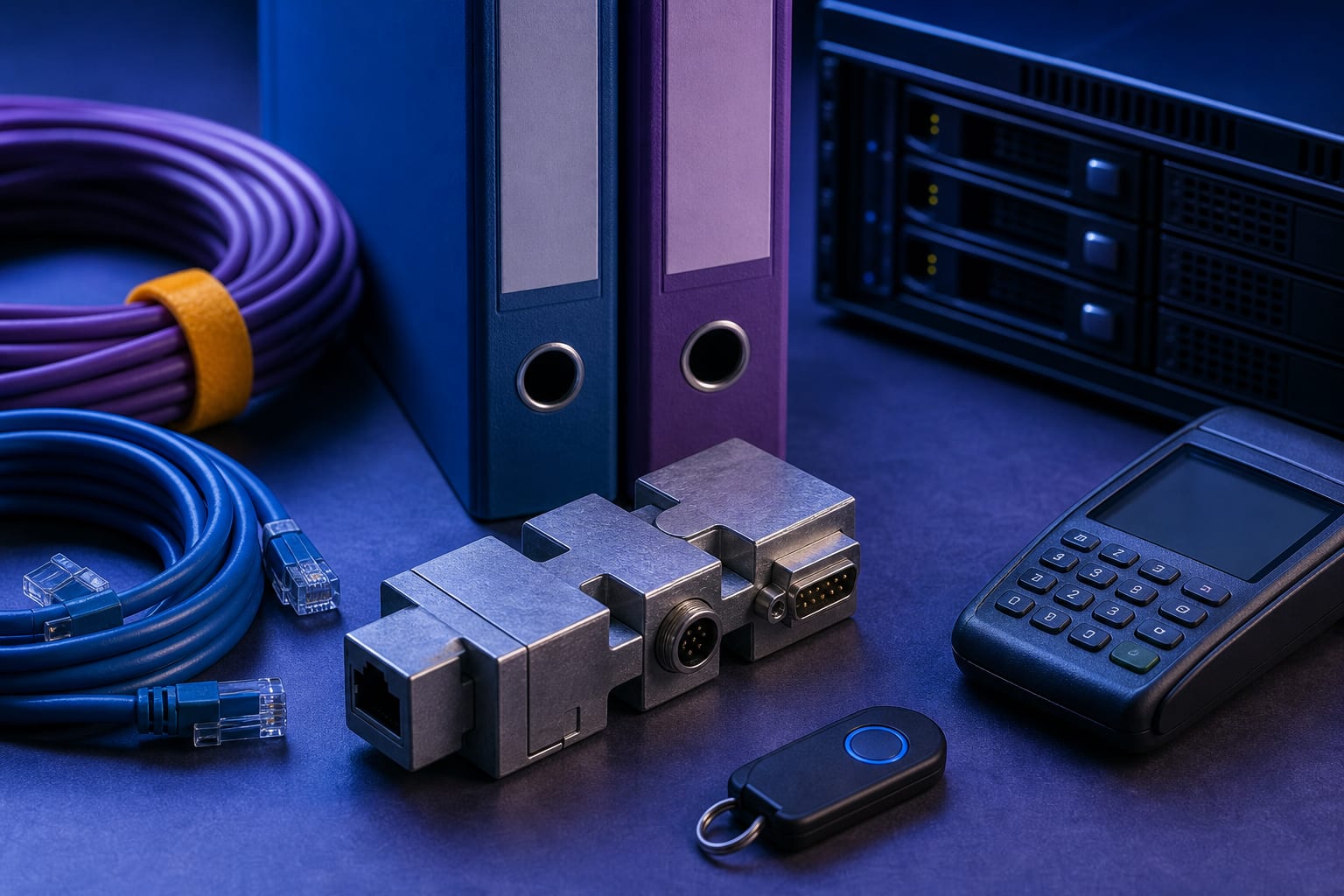
Integrations are where many portal budgets change. A static dashboard can be inexpensive. A dashboard that reflects real-time order status, invoice balance, open cases, contract entitlements and payment history requires careful integration architecture. Each connected system adds authentication, API limits, data models, permissions, testing and fallback behavior.
CRM integrations are usually the first priority because they connect contacts, companies, account owners and service history. ERP integrations are harder because they may involve orders, inventory, shipments, invoices, credits, taxes and pricing rules. Support integrations can reduce duplicate work by turning portal requests into Zendesk, Intercom, Freshdesk, Jira Service Management or Salesforce Service Cloud tickets.
SSO is often important for larger B2B clients. If your customers expect Okta, Microsoft Entra ID, Google Workspace or SAML-based login, budget for identity planning and testing with at least one pilot customer. For regulated sectors such as healthcare, finance, insurance or government contracting, stronger auditability and compliance review should be part of the estimate from the start.
Integration questions to answer before requesting a quote:
A good agency will prototype risky integrations early rather than leaving them until the end of the build.
A customer portal handles private business data, so security cannot be treated as a final checklist. US companies should think about applicable obligations such as state privacy laws, CCPA/CPRA if California residents are involved, HIPAA if protected health information is present, ADA accessibility expectations for customer-facing digital products, FTC security expectations and contract requirements from enterprise customers. SOC 2 may also become relevant if the portal supports a SaaS business or handles sensitive client operations.
Security features add cost, but weak security adds more risk. At minimum, a B2B portal should use encryption in transit, secure password storage, MFA support, role-based access, least-privilege admin roles, session management, audit logs, backup strategy, monitoring and vulnerability patching. If the portal handles payments, avoid storing card data and rely on compliant processors with tokenization.
Accessibility also belongs in this conversation. A portal used by customers, vendors or partners should be designed with WCAG-aligned practices such as keyboard navigation, sufficient contrast, form labels, focus states, error messaging and screen reader compatibility. Retrofitting accessibility late is more expensive than building it into design and QA.
Budget for these controls when sensitive data is involved:
Do not use a low-cost plugin stack for regulated workflows unless a qualified team has reviewed data exposure and access boundaries.
A reliable estimate comes from discovery, not guesswork. Before design starts, your team should define the portal’s business case, user roles, top workflows, system dependencies, security requirements and adoption targets. This avoids paying for features that sound useful but do not reduce support load, speed up revenue or improve customer retention.
For a custom portal, Clyrix Digital typically recommends scoping around customer jobs rather than internal wish lists. For example, “download the latest compliance certificate,” “pay an invoice,” “request a quote,” “check shipment status,” or “submit a warranty claim” are clearer than “build a dashboard.” Each task can be estimated, prioritized and measured after launch.
Document every user type: buyer, finance contact, approver, administrator, field technician, reseller or internal support agent. Then define what each role can view, edit, approve, download and invite.
Choose workflows that reduce the most manual effort or improve customer experience quickly. Common first workflows include document access, support requests, invoice visibility, order status and quote requests.
Review CRM, ERP, accounting, support and storage systems. Confirm API access, field names, duplicate records, ownership rules, rate limits and sandbox availability before committing to a timeline.
Decide whether the portal needs SSO, MFA, audit logs, HIPAA safeguards, SOC 2-aligned controls, ADA accessibility testing or payment compliance boundaries. These choices affect architecture and QA.
Separate must-have launch features from post-launch enhancements. This gives leadership a realistic first budget and a roadmap for AI self-service, advanced reporting and deeper ERP workflows.
AI self-service is changing what buyers expect from customer portals. Users increasingly want a portal that can answer account-specific questions, retrieve the right document, summarize ticket history, help complete forms and escalate to a human when needed. That is very different from a standalone chatbot that gives generic answers outside the workflow.
For 2026, a useful AI portal feature often combines retrieval-augmented generation, permission-aware knowledge access, ticket creation, human handoff and analytics. The AI should only see content the logged-in user is allowed to access. It should cite source documents where possible, explain uncertainty and avoid making commitments about pricing, contracts, delivery dates or compliance unless those answers come from approved systems.
AI is not always worth adding to the first release. If your knowledge base is outdated, documents are poorly organized, or internal teams cannot agree on approved answers, build the portal foundation first. Add AI after the core workflows, content governance and data access rules are stable.
Good AI self-service use cases include:
A practical AI add-on often starts at $25,000 to $60,000 for controlled retrieval and can exceed $100,000 when it requires multi-system actions, strict governance and complex human review workflows.
Not every business needs fully custom software. The right choice depends on workflow uniqueness, integration depth, compliance needs and customer expectations.
| Approach | Typical cost | Speed | Best for |
|---|---|---|---|
| SaaS portal tool | $200–$2K/mo | Fast | Standard support |
| CRM portal | $5K–$60K | Fast-medium | CRM-centered teams |
| Low-code portal | $20K–$100K | Medium | Internal workflows |
| Custom web portal | $35K–$350K+ | Medium-slower | Unique operations |
| Hybrid approach | $60K–$220K | Medium | Custom plus SaaS |
Buying is often best for commodity workflows. Custom development is stronger when the portal must reflect proprietary processes, account-specific rules or competitive customer experience.
The launch budget is only part of the financial picture. A customer portal needs hosting, monitoring, security updates, support, bug fixes, backups, API maintenance and periodic improvements. Industry planning norms often put annual maintenance at 15% to 25% of initial development cost, though highly integrated portals can require more active support.
API changes are a common hidden cost. CRM, ERP, payment, identity and support platforms update APIs, authentication methods and rate limits. If your portal depends on them, someone must monitor changes and test updates. Security patches, dependency upgrades and cloud cost optimization should also be planned rather than handled only when something breaks.
Internal ownership matters too. A portal needs a product owner who can prioritize requests, approve content, coordinate with customer-facing teams and review analytics. Without ownership, portals become stale, support teams lose trust, and customers return to email.
Plan recurring budget for:
A portal that saves staff hours should still have an operating budget. Self-service is a product, not a one-time asset.
B2B customer portal development cost 2026 is best understood as a business-system investment, not a website line item. A focused MVP may cost $35,000 to $90,000, while an integrated operational portal commonly reaches $90,000 to $180,000 and advanced secure platforms can exceed $250,000. The difference is driven by workflows, integrations, permissions, compliance and long-term maintainability.
If you are evaluating a portal, start with the customer tasks that create measurable value: fewer support emails, faster payments, easier document access, better order visibility or smoother service requests. Then scope security, integrations and roadmap honestly. An experienced custom web application partner such as Clyrix Digital can help translate those requirements into a phased build plan, realistic budget and secure portal architecture.
A B2B customer portal in 2026 usually costs $35,000 to $90,000 for a focused MVP, $90,000 to $180,000 for a portal with CRM or ERP integrations, and $180,000 to $350,000 or more for a complex, secure platform. The main cost drivers are integrations, permissions, workflows, compliance needs and data quality.
A practical customer portal MVP should include secure login, company accounts, role-based permissions, customer dashboard, document access, support request submission, status tracking, notifications and staff admin tools. It may include one critical integration, such as CRM or accounting sync, but should avoid too many edge cases before adoption is proven.
Yes, a SaaS portal is usually cheaper upfront and can work well for standard support, knowledge base or account access use cases. Custom development becomes a better fit when you need proprietary workflows, account-specific pricing, ERP integration, complex permissions, compliance controls or a customer experience that off-the-shelf tools cannot support.
A focused B2B customer portal MVP often takes 12 to 24 weeks from discovery to launch. More integrated portals can take 6 to 9 months, especially when ERP sync, SSO, payments, data migration, audit logs or regulated workflows are involved. Discovery and integration prototyping help reduce timeline risk.
Yes, AI self-service can be added when the portal has reliable content, clear permissions and stable workflows. Useful AI features include knowledge retrieval, document search, ticket summarization, form assistance and human handoff. It is usually better to avoid AI in the first release if your knowledge base or customer data is not well organized.
Plan for hosting, monitoring, backups, security updates, bug fixes, API maintenance, analytics, support and feature improvements. A common annual planning range is 15% to 25% of the original build cost. Highly integrated portals may require more because third-party APIs, security requirements and business workflows change over time.

Sep 16, 2026
Use this SOC 2 ready SaaS app development checklist to build controls early, reduce rework, and prepare your SaaS for enterprise buyers.
Sep 15, 2026
Use this PCI DSS 4.0 e-commerce website compliance checklist to reduce checkout scope, fix risky scripts and prepare your 2026 store.

Sep 15, 2026
EHR integration cost 2026 guide for US teams. Compare FHIR, HL7, SMART apps, vendor approval, HIPAA security and maintenance pricing.

Your trusted partner in innovative web solutions, delivering tailored development, design, and marketing services to elevate your digital presence and business growth.
info@clyrixdigital.com
© 2026 Clyrix Digital. All rights reserved.


